
A typical call about this starts the same way in Hazel Park, Ferndale, or Royal Oak: someone hits the remote on their way to work and nothing happens, or the opener hums but the door stays put. By the time a technician pulls into the driveway, the homeowner has usually already hit the button five or six more times, which is understandable but doesn't change what's actually wrong. Figuring that out takes a few minutes of checking things in a specific order, cheapest and simplest first.
What the Symptoms Usually Look Like
Before any tools come out, it helps to know what's actually happening. The common patterns are:
- The opener does nothing at all — no light, no sound, no movement.
- The opener motor runs or hums, but the door doesn't budge.
- The door lifts an inch or two and then stops or reverses.
- The door opens fine when pulled by hand but the opener won't move it.
- A light on the opener blinks a set number of times, which is usually an error code.
Each of these points toward a different part of the system, which is why a technician works through causes in a set order rather than guessing.
Causes, in the Order a Technician Checks Them
1. Power and Controls
This sounds basic, but it's first because it's fast to rule out and surprisingly common. A tripped breaker, an opener accidentally unplugged while doing fall garage cleanup, or dead batteries in the remote or wall keypad can all look like a dead door. A quick fix here means checking the outlet, the breaker panel, and swapping batteries before anything else.
2. Safety Sensor Alignment
Every opener built in the last few decades has two small sensors near the floor on each side of the track. If they're misaligned, dirty, or something is blocking the beam between them, the opener will refuse to close the door and sometimes won't open it either, flashing an error light instead. Leaves, cobwebs, or a stack of fall storage bins in the garage are common culprits this time of year. The fix is usually just realigning or cleaning the sensors, though a cracked sensor eye needs replacing.
3. Manual Lock or Disconnect Engaged
If someone pulled the red emergency release cord — often during a power outage — the door is mechanically disconnected from the opener and will stay that way until it's reset. Similarly, a manual slide lock left engaged on the track will stop the door cold. Both are quick checks and quick fixes once spotted.
4. Broken or Worn Springs
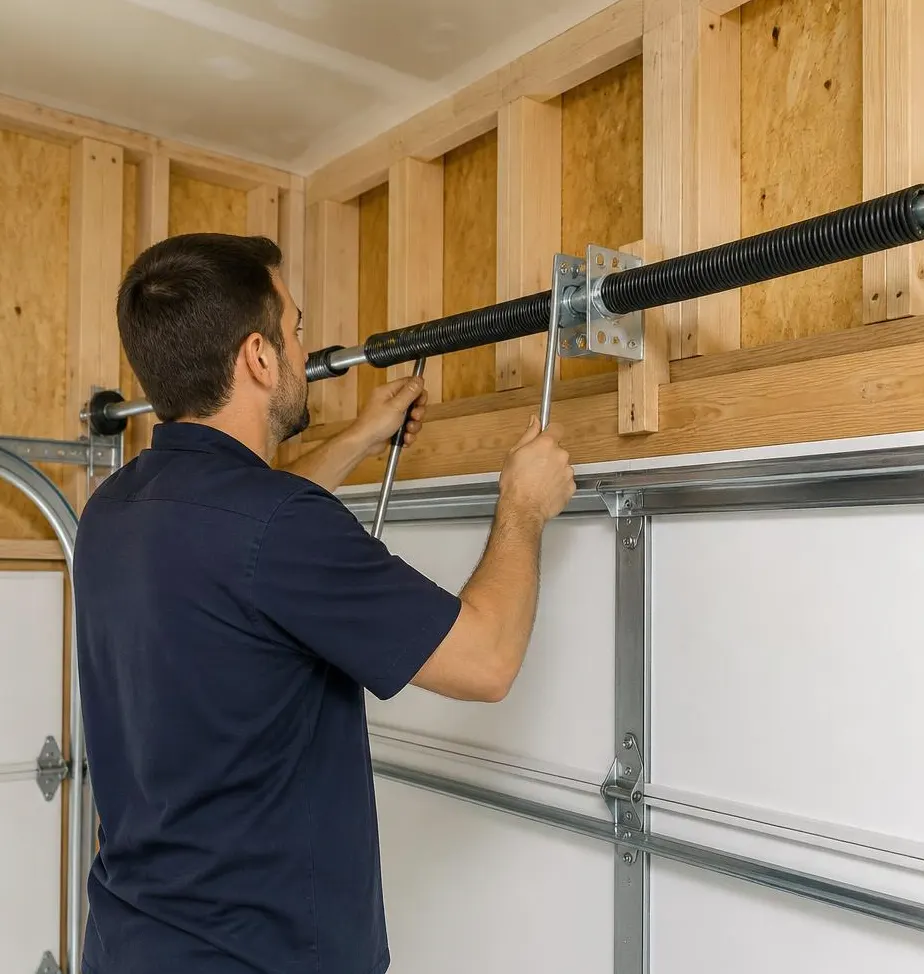
This is the one technicians watch for closely, especially heading into colder months. Torsion and extension springs do the heavy lifting on a garage door, and cold metal is more prone to snapping than warm metal. A door with a broken spring usually won't budge at all, or the opener will strain and hum without lifting it. A visual check of the spring above the door (a visible gap in a torsion spring is the giveaway) confirms it. Spring replacement means fully releasing tension from the old spring, installing a correctly sized matching spring, and winding it to the right tension — this is not a safe DIY repair given how much force is stored in a wound spring.
5. Cables Off the Drum or Snapped
Cables work alongside the springs to guide the door's weight evenly. If a cable slips off its drum or frays and breaks, the door can hang crooked, jam partway, or refuse to move. Technicians check both sides of the door for even tension and look for frayed strands near the bottom bracket. The fix involves re-seating or replacing the cable and verifying the drums are properly aligned.
6. Stripped Opener Gear
Inside most chain or belt-drive openers is a small plastic gear that does a lot of work over the years. When it strips, the motor runs (sometimes loudly) but the door doesn't move at all. This is one of the most common opener failures and usually means replacing the gear kit or, if the opener is old, replacing the unit entirely.
7. Track Obstruction or Misalignment
Last on the list because it's less common but worth checking: a bent track, a dented roller, or debris lodged in the track can physically block the door. Houses in this area with garages that catch runoff during spring thaw sometimes develop rust or minor track shifting over time. The fix ranges from a simple cleaning and realignment to replacing a damaged track section.
When to Call Hazel Park Garage Door
If the quick checks — power, remote batteries, sensors, manual lock — don't solve it, or if you can see a gap in a spring, stop using the door and call. Our Garage Door Repair visits start with the same diagnostic order above so we're not guessing or replacing parts that don't need it. If it turns out to be a spring, our Spring Replacement service uses correctly matched springs set to proper tension, done safely with the right tools. And if the issue traces back to a worn-out opener motor or stripped gear, we handle Garage Door Opener Repair & Installation as well.
If your garage door in Hazel Park, MI won't open, give us a call before winter sets in and a borderline spring finally gives out in freezing weather. We'll figure out exactly what's wrong and walk you through the fix in plain English.